



Setting up a workshop does not have to involve building an expensive brick-and-mortar facility. More businesses and private customers are choosing workshops made from shipping containers, combining mobility, functionality and flexibility. Their sturdy construction makes them a solid base for workshop activities, equipment storage and even temporary technical facilities at construction sites. In this guide, we explain step by step how to organize a container workshop, what to consider when choosing a unit and how to design its interior for your individual needs. If you need a practical solution that works at different locations, read on.
Why set up a workshop in shipping containers?
Shipping containers are finding a second life as functional workshops. Their first major advantage is mobility: a workshop can be transported to where it is needed, whether a construction site, production hall or private garage.
Another benefit is their durable construction. Designed for demanding conditions in transport, containers are strong and resistant to weather. They are useful for storing tools, machinery and materials, as well as carrying out everyday repairs and servicing.
Cost matters too. Compared with a conventional building, converting a container can be much faster and less expensive. A ready-made workshop container might be installed within a few days. Find out more about shipping container costs here.
Finally, a container workshop can be fully adapted to individual needs, in both equipment and interior layout.
Choosing a container – what should you consider?
Before designing the interior, select a suitable unit. The most popular shipping-container sizes are 20 and 40 feet, approximately 6 and 12 meters long. Your choice depends on available space and the scope of work. A smaller container is suitable for a mobile service operation; a larger one can house a full workshop with a storage area.
Technical condition is important. Check watertightness and floor condition, which directly affect safety and working comfort. Used containers cost less, but inspect them carefully or choose a supplier offering certified equipment, such as Contivus.
Another decision is whether to buy or rent. If the workshop is temporary or needed only for a specific contract, renting a container may be more cost-effective.
Match the container to its planned location, whether a construction site, private property or industrial area. Prepare stable ground and ensure convenient access for delivery vehicles.
Designing a shipping container workshop interior
A major advantage of a container workshop is the freedom to arrange its interior. Good design should focus on ergonomics, quick access to tools and making full use of the available space.
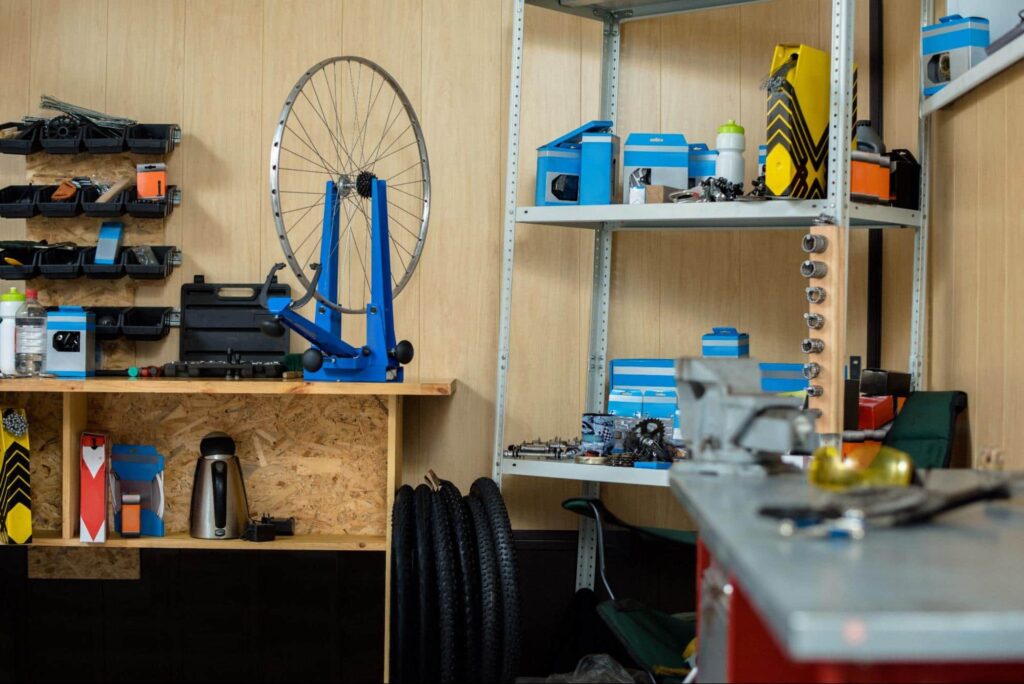
First, divide the container into zones: a workspace with a workbench, a storage area for tools and spare parts, and possibly a staff area in a larger workshop. Mobile tool cabinets are especially useful for maintaining order and bringing equipment directly to the work area.
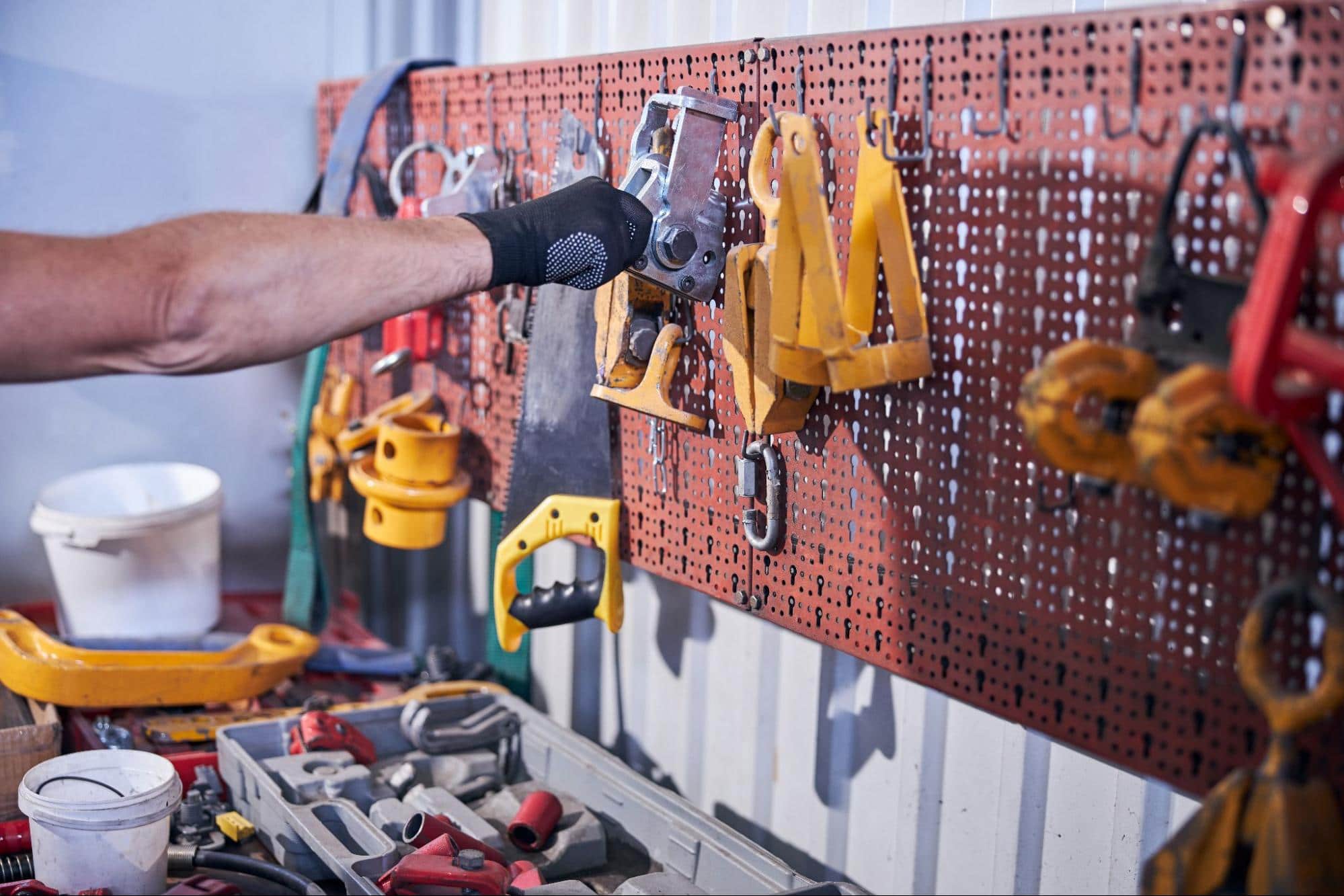
Hooks, racks and shelves on the walls increase usable storage. Provide effective lighting so work can continue regardless of the time of day. Plan electrical wiring, sockets and LED lighting around the workshop’s specific activities.
The container can also be fitted with extra windows, doors and ventilation systems to improve comfort and safety. Modern workshop containers can be customized to each customer’s requirements.
Workshop equipment – what do you need?
A functional workshop needs more than an empty container. Equipment must be selected and arranged carefully.
Electrical installations are fundamental for powering tools and providing good working conditions. Position sockets where they are needed and choose energy-efficient lighting, preferably LEDs suited to a workshop.
Organizational features matter too: shelving, racks, mobile tool cabinets, equipment stands and storage for small parts, bolts and connectors. A well-planned interior makes work more efficient.
Depending on the location and intended use, consider heating such as electric heaters or air conditioning, particularly if the workshop will operate year-round.
Security must not be overlooked. Strong locks, anti-burglary systems and reinforced entrance doors are especially important on open sites.
With suitable equipment, even a compact container can become a fully functional facility for specialist work.
Choosing a location and positioning the workshop
The workshop’s location has both practical and administrative implications. Container workshops are commonly installed on construction sites, beside industrial halls, on agricultural property or on private plots as alternatives to conventional garages.
The container should rest on a stable base, such as concrete blocks, slabs or point foundations. This protects the structure against moisture and improves longevity. Ensure that delivery vehicles can reach the site and that everyday access is convenient.
If you plan to place the workshop in a public area or beside a road, check whether permission is required. Containers are often treated as temporary structures, but local rules vary. We discuss the formalities in a separate article.

Transport and installation – what does the process involve?
Quick setup is one of the greatest advantages of a container-based workshop. A ready-made unit can sometimes be delivered within a few days and prepared for use promptly.
Delivery is typically carried out using a truck fitted with a hydraulic loading crane, allowing precise positioning. Unloading and placement usually take from several dozen minutes to a few hours, depending on site conditions.
Choosing a fully equipped container eliminates much of the finishing work. Workshop operations may be able to begin almost immediately after unloading, particularly useful for contracts in different locations where time and flexibility matter.
Ready-made shipping container workshops – example applications
Container workshops work across many industries. A construction machinery service company can use a mobile workshop that moves between projects and provides essential equipment on-site.
Carpenters, mechanics, metalworkers and installers can use a container as both a workplace and a store for tools and spare parts. The ability to relocate it quickly is useful when working conditions change.
Containers also serve as temporary facilities during renovations, for example when the regular workshop is being modernized. They allow businesses to keep operating without prolonged downtime.
Summary
A shipping container workshop is a practical, flexible and potentially economical solution for many settings. Mobility, customization and fast installation make it a useful alternative to conventional premises.
If you are looking for shipping containers suitable for workshop conversion, explore our range. At Contivus, we sell and rent containers in a variety of sizes and arrange transport to the destination.
Browse our other blog articles for more ideas and advice on adapting shipping containers for different uses.