



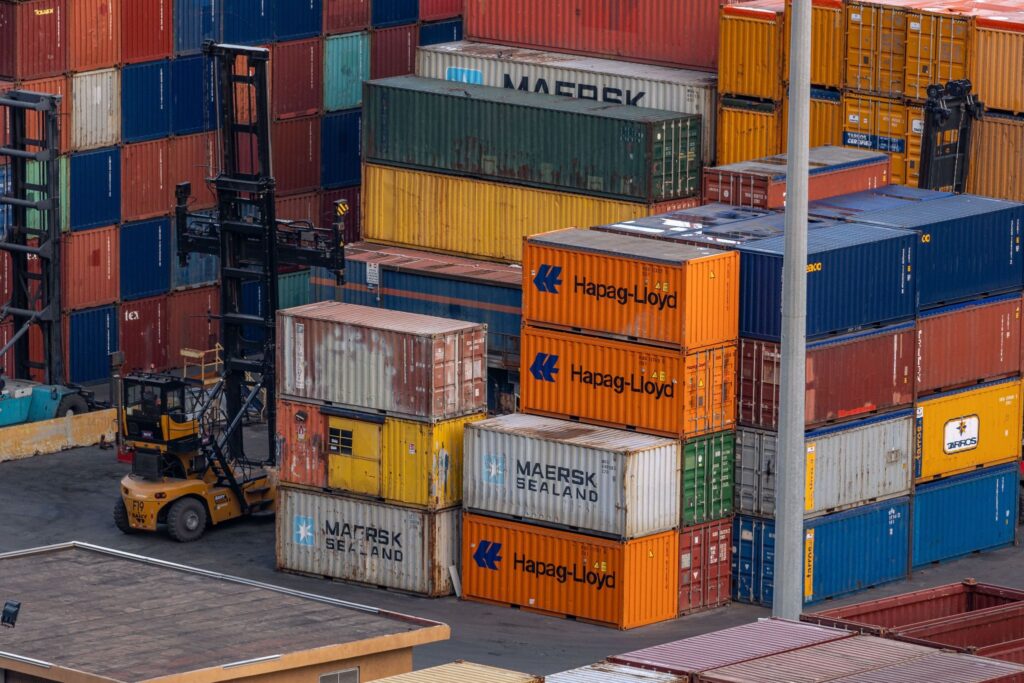
A standard shipping container usually has an external height of 2.591 m, or 8’6”. This applies to popular 20 ft and 40 ft Dry Van containers. Taller shipping containers, known as High Cube, are usually 2.896 m high, or 9’6”. In practice, the extra 30.5 cm can make a substantial difference when planning loading, storage or converting a container into a storage unit.
In this article, we examine the heights and internal dimensions of different container types and explain how to select a container for cargo transport, goods storage and specialist applications.
Shipping container height under ISO standards: the basics
Shipping containers are designed for safe use in sea, road and rail transport. Standardization is vital because it enables cargo to move between different modes of transport without having to be unpacked and repacked.
The principal reference for shipping container dimensions is ISO 668, which defines the classification, external dimensions and selected characteristics of Series 1 containers. The standard specifies external heights including 2.438 m, 2.591 m and 2.896 m. In practice, 2.591 m standard containers and 2.896 m High Cube versions are the most common.
Exact specifications depend on the container type. A standard Dry Van has different parameters from a refrigerated container or specialist Open Top or Flat Rack unit. When choosing, check not just the external height but also the container dimensions, including internal dimensions, door opening, payload capacity and maximum weight.
Heights of different types of shipping containers
The comparison below shows the key heights of containers used in international transport. Remember that ISO standards specify reference and minimum values, while the actual dimensions of individual containers can vary slightly by manufacturer, construction, equipment and intended use.
|
Container type |
External height |
Approximate internal height |
Door height |
Application |
|---|---|---|---|---|
|
Low-height container, e.g. selected 8 ft units |
2,438 m |
ok. 2,197 m |
ok. 2,134 m |
Transport and storage with restricted headroom |
|
Standard 20 ft DC container |
2,591 m |
ok. 2,35-2,39 m |
ok. 2,26 m |
General-purpose goods transport and storage |
|
Standard 40 ft DC container |
2,591 m |
ok. 2,35-2,39 m |
ok. 2,26 m |
Transporting larger volumes of cargo by sea |
|
40 ft HC container |
2,896 m |
ok. 2,65-2,70 m |
ok. 2,56 m |
High-volume cargo, storage units and conversions |
|
45 ft HCPW container |
2,896 m |
ok. 2,65-2,70 m |
Depends on model |
Palletized transport and increased capacity |
|
Open Top container |
Usually 2.591 m or 2.896 m |
Depends on construction |
Depends on model |
Top loading, machinery and unusually shaped materials |
|
Flat Rack |
Depends on version |
Open structure |
No conventional doors |
Heavy and oversized cargo |
External height matters when planning road or rail transport and positioning a container on a site. Internal dimensions determine how cargo, Euro pallets, machinery or materials can be arranged. Door height determines whether goods can be loaded and unloaded conveniently through the opening.
20 ft, 40 ft and 40 ft HC containers: how do their heights differ?
The most common logistics containers are 20 ft and 40 ft units. In standard versions, both usually have the same external height of 2.591 m. Their main differences are length, volume in cubic meters, payload capacity and potential uses.
A 20 ft DC container is a good choice for transporting heavier goods, building materials, tools or smaller consignments. Its compact size also makes it suitable for storage, particularly where the installation site has limited space.
A 40 ft DC container has the same height as a 20 ft model but provides considerably more room. A 40 ft container is used to transport goods in larger quantities, for storage and for projects where capacity and versatility matter.
A 40 ft HC container, or High Cube, is taller, with a typical external height of 2.896 m. The additional space makes it easier to accommodate tall cargo, shelving, installations or equipment. This versatility makes 40 ft HC units popular not only in transport but also as the basis for storage facilities, technical units and functional conversions.
Internal dimensions, doors and loading: why is external height alone insufficient?
Knowing the height of a shipping container is not always enough to make the right choice. In practice, three measurements matter: external height, internal dimensions and the height of the door opening.
External height tells you how much space a container occupies in transport and when positioned on-site. Internal height defines the usable space for goods. The door opening determines whether cargo can be moved inside without damage. This is particularly important when transporting machinery, Euro pallets, tall packages, shelving or materials with non-standard dimensions.
Internal dimensions depend on the container’s construction, floor thickness, walls, roof, insulation, ventilation openings and additional equipment. Containers may also have cargo securing points and fittings to help keep goods safe in transit. For heavier loads, you must also check payload capacity, maximum gross weight and the number of tonnes that can be transported safely.
Read more about the relationship between tare weight, payload and transport safety in our article: How Much Does a Shipping Container Weigh?.
Specialist containers and height: refrigerated, Open Top and Flat Rack
Not all containers are built like a standard Dry Van. Depending on their intended use, specialist containers are designed for particular cargo, temperature requirements, loading methods or safety considerations.
Refrigerated containers carry goods that require controlled temperatures, such as food, medicines and certain industrial materials. Their external height may match that of standard or High Cube units, but insulation and refrigeration equipment reduce the usable internal space compared with conventional dry containers.
An Open Top container is designed for loads that cannot easily be moved through regular doors. Its removable or openable roof permits top loading, for example using a crane. This works well for machinery, steel structures and unusually sized components.
A Flat Rack is designed for heavy and oversized cargo. It has no conventional side walls, making it suitable where an ordinary container would not provide enough space. In all these cases, goods must be secured properly against movement, damage and exposure to the weather.
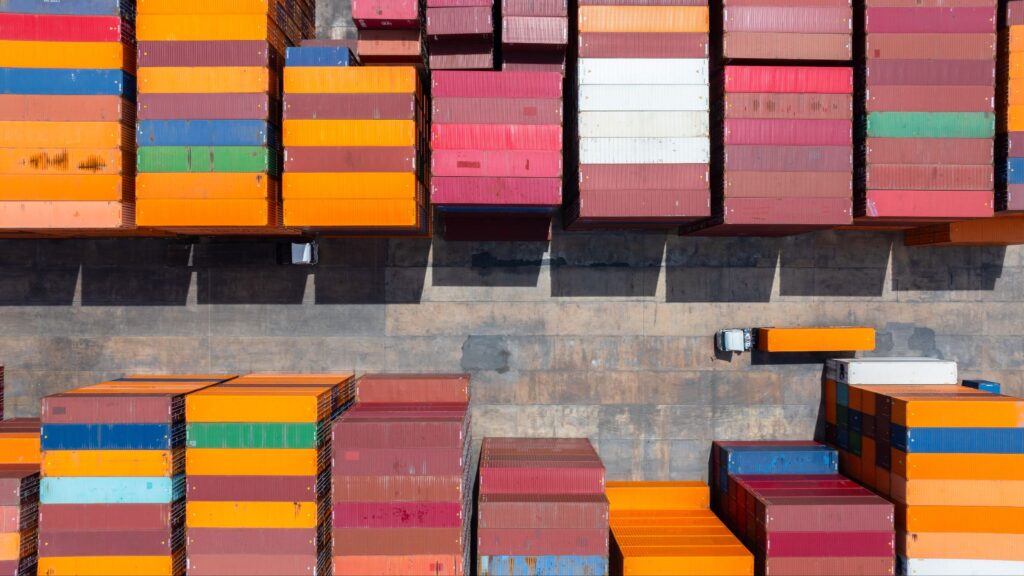
Container height in sea, road and rail transport
Standardized container dimensions are one reason containers have become essential to modern logistics. The same cargo can travel by ship, train and truck without being repacked, making transport faster, safer and easier to plan.
In maritime transport, height affects how containers are stowed aboard a vessel. For road transport, the overall height of the vehicle combination, including container and trailer, must be considered. Rail transport is subject to loading gauges and route restrictions. International transport planning must therefore account for road and rail infrastructure limits as well as the container’s own dimensions.
Containers used for intermodal transport must therefore meet defined standards. Standardization makes it possible to move cargo efficiently between a seaport terminal, warehouse, transshipment yard and final customer. If transport will be the main use, take a look at our transport containers.
How do you choose the right container height for your needs?
The right height depends on what you intend to store and how the container will be used. A standard container with a height of 2.591 m is usually sufficient for typical goods transport. It is a versatile, widely available option suited to most cargo.
If you need more space, easier organization or room for shelving, consider a High Cube. A 40 ft HC container is suitable for bulky cargo, material storage, conversions and projects requiring greater volume. The extra height can simplify loading, unloading and everyday use as a storage unit.
For storing goods at a yard, construction site or business, customers often choose storage containers. They protect their contents against weather and unauthorized access. If the container will only be used periodically, consider renting a container. For longer-term needs, browse our shipping containers for sale.
Summary
Shipping container height depends on the type. Standard 20 ft and 40 ft containers are typically 2.591 m high, while High Cube containers, including 40 ft HC, are 2.896 m high. When choosing, consider not only the external height but also internal dimensions, doors, payload capacity, intended use and transport method. This will help you find a container suited to the cargo, available space and planned application.