



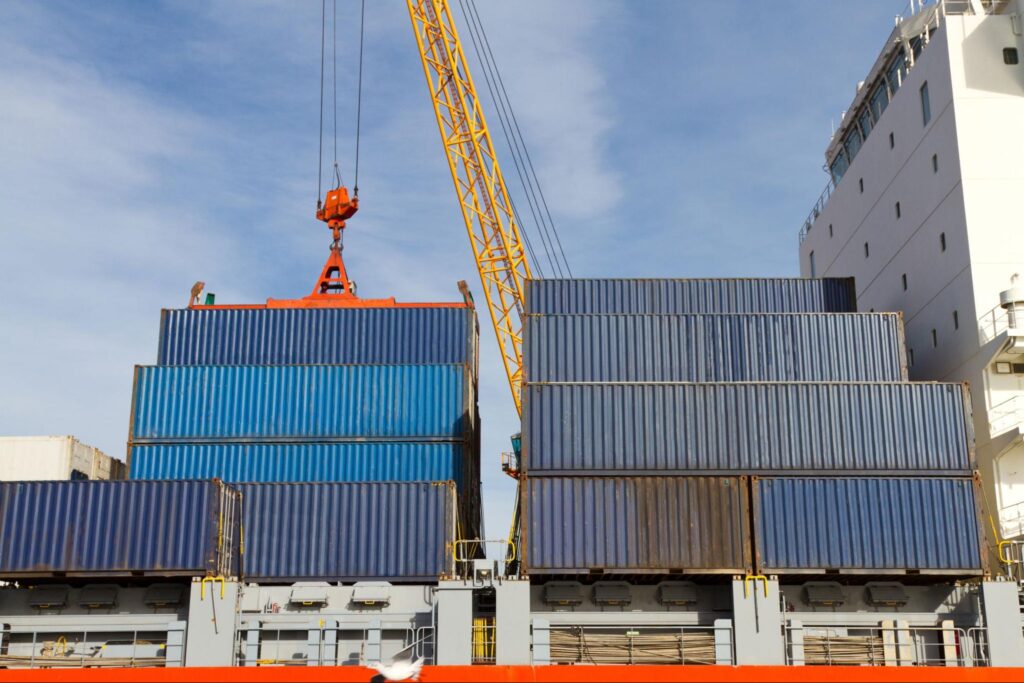
This question comes up frequently among both businesses planning to transport goods and customers looking for storage containers. Container weight is crucial in sea and land transport: it affects costs, safety and compliance with international shipping regulations. An empty container used for storage has different requirements from a unit intended to carry cargo by sea.
Shipping containers vary not only in their dimensions but also in construction and purpose. Their weights therefore differ by type, size and technical specification. Understanding these differences makes it easier to plan transport, loading and storage and, above all, to maintain safety.
What does “container weight” mean? Key terms
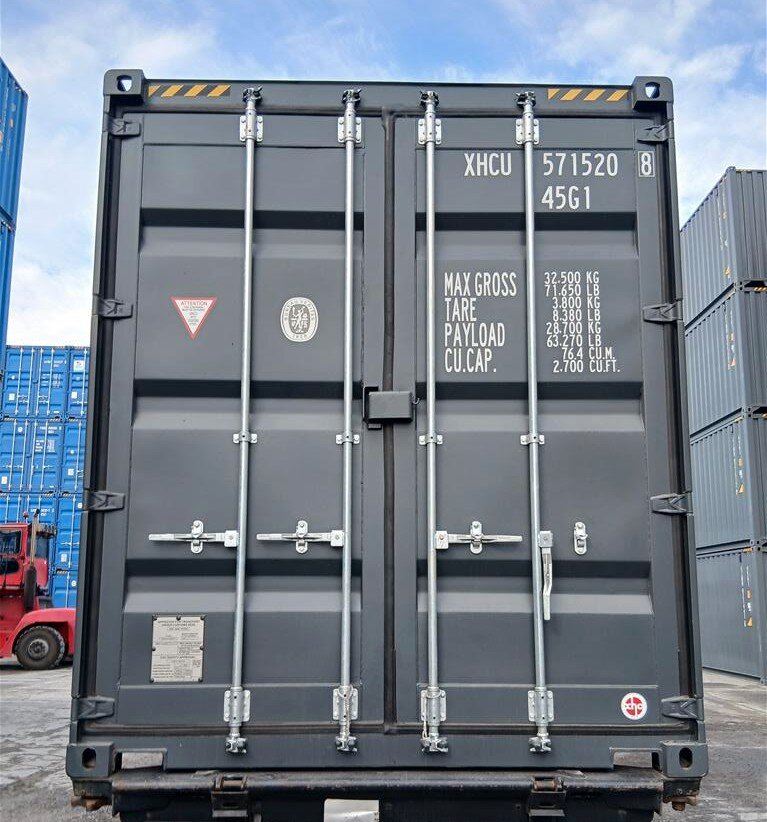
When discussing container weight, start with a few essential definitions. The most common is container tare weight: the weight of an empty container without cargo. Tare weight, also known as unladen weight, is the basis for logistics and transport calculations. It should not be confused with a container’s payload capacity, which specifies the maximum weight of cargo that can safely be loaded inside.
In practice, the container’s own weight plus the cargo weight must not exceed the applicable limits. These are governed by international regulations and ISO standards, which also define the required information shown on each standard container’s markings. The markings provide information about weight, dimensions and permitted weight limits.
A shipping container’s weight also depends on its construction, age and any additional equipment. Weight can vary even between containers of the same type. This is normal and important for transport safety.
Shipping container dimensions and weight
Container dimensions directly affect weight, although the relationship is not always obvious. The main considerations are external dimensions, height and cargo-space volume. Larger containers generally have a higher tare weight, but the differences are not necessarily proportional.
Consider 20 ft and 40 ft containers. The 20 ft shipping container, often simply called a 20-footer, is extremely popular and versatile. Its compact dimensions make it suitable for both transport and storage. A 40 ft container provides substantially more room, but it does not weigh exactly twice as much even though it can carry a greater volume of cargo.
Differences in weight result from construction, reinforcements and how the available space is used. Always consider not only dimensions but also the intended purpose of a container and the conditions in which it will operate.
How much does a standard shipping container weigh? (DC and HC)
Standard containers are the most common choice for transport and storage. They are versatile, available worldwide and built to ISO standards. The main varieties are DC (Dry Container) units and their taller High Cube counterparts.
A standard 20 ft DC container typically weighs around 2.2–2.4 tonnes. It is the most popular type, also known as a 20-foot container or 20 ft shipping container. Its weight makes it suitable for international transport while allowing relatively straightforward handling during loading and unloading. The payload capacity of a 20 ft DC container is typically around 28 tonnes, offering considerable flexibility for different types of cargo.
A 40 ft DC container is larger and offers more cargo space, but its tare weight is usually only around 3.7–4.0 tonnes. High Cube containers form another category. Their greater height allows better use of the available internal space. A High Cube weighs slightly more than a standard container of the same length, but the difference is small compared with the extra space it provides.
Specialist container types and their weights
Specialist containers are used for transport and storage alongside standard units. Their construction is tailored to specific tasks, which directly affects the weight of each type. In practice, the empty weight of specialist containers is often noticeably higher than that of conventional DC containers.
HCPW (High Cube Pallet Wide) containers, designed for transporting Euro pallets, typically weigh around 3.9–4.2 tonnes in the 40 ft version, although some units can reach 4.6 tonnes. The extra width and reinforced construction make better use of the cargo space but increase tare weight.
Open Top containers, which do not have a fixed roof, are designed for loading from above. Depending on their size, they weigh approximately 2.3–2.5 tonnes (20 ft) and 3.8–4.2 tonnes (40 ft). Despite their open design, their weight is comparable to standard containers because their frames and corners are additionally reinforced.
Flat Rack containers have an even more robust structure and are used for heavy, oversized cargo. A 20 ft Flat Rack typically weighs around 2.8–3.0 tonnes, while the 40 ft version can reach 4.8–5.5 tonnes. This tare weight results from the heavy-duty structure designed to withstand substantial loads.
Refrigerated containers, or reefers, are significantly heavier because of their refrigeration units and insulation. An empty 20 ft reefer typically weighs 2.9–3.1 tonnes, and a 40 ft reefer approximately 4.5–4.8 tonnes. These containers are widely used for food transport, where controlled conditions are essential.
The heaviest in this category are tank containers, designed to transport liquids. Depending on their construction and capacity, their tare weight is generally between 3.5 and as much as 5.5 tonnes. Their weight and specialist purpose require particular attention to transport planning and applicable weight limits.
What determines how much a shipping container weighs?
Although every standard container has a defined specification, its actual weight may vary. Age is a key factor: older containers may have additional reinforcements, repairs or layers of paint, all of which affect tare weight. Technical condition and compliance with applicable ISO standards are equally important.
Additional equipment also affects container weight. Reinforced flooring, extra securing points, ventilation and electrical systems increase weight but can improve functionality and safety. The weather conditions in which a container has been used can matter too. Operation in a harsh climate may lead to structural repairs that increase its mass.
Whether a container is new or used is another consideration. Used units may vary in weight even within the same category, which is why logistics calculations should always rely on the specification plate of the particular container.
Container weight, transport and safety
Container weight directly affects safety in both sea and land transport. Exceeding permitted limits can compromise cargo stability and, in extreme cases, create hazards aboard ships and on the road.
For international transport, it is especially important to establish gross weight correctly: the combined weight of the container itself and its cargo. This matters when planning loading, positioning containers aboard ships and unloading them at the destination port. Proper weight distribution helps maintain the stability of the transport unit.
From a logistics perspective, knowing the container’s weight helps avoid delays, penalties and administrative problems. It is also essential for regulatory compliance and the safety of people and goods.
Summary and practical advice
How much a shipping container weighs depends on its type, dimensions, construction and intended use. Standard units such as 20 ft DC and 40 ft DC containers differ significantly from specialist designs tailored to particular tasks and transport conditions.
When choosing a container, consider not only dimensions and cargo space but also tare weight, payload capacity and intended application. A properly selected container is a versatile product that can serve for both transport and storage for many years. If in doubt, consult specialists who can help you select a suitable solution that meets your requirements and complies with applicable regulations.