



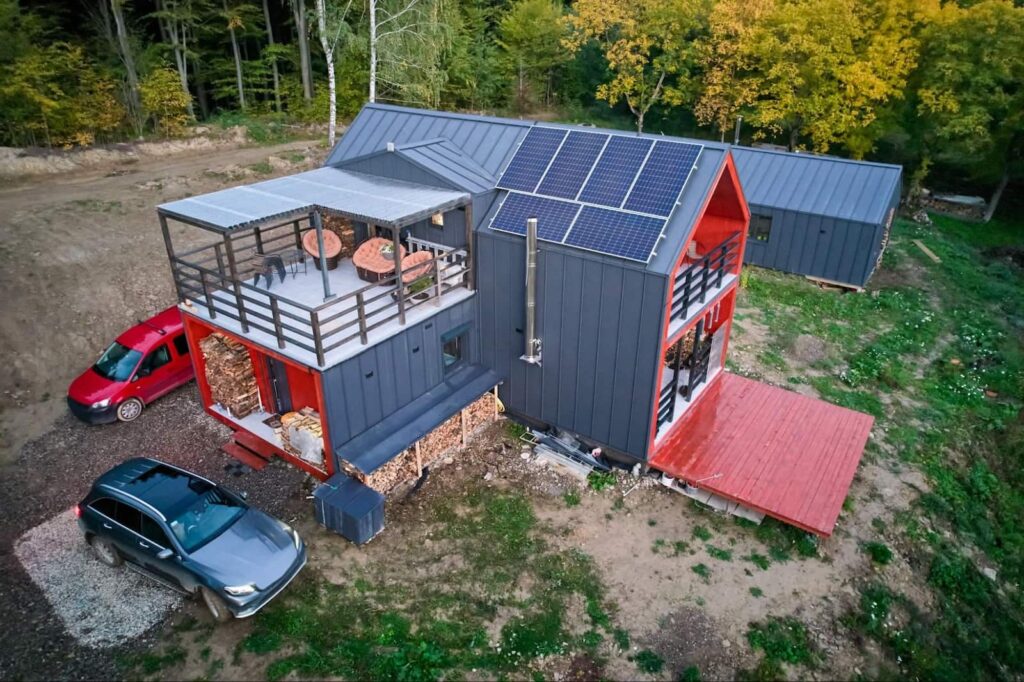
Building homes from shipping containers is becoming increasingly popular in modern modular construction. Their durability, mobility and conversion potential make containers useful not only for warehouses and industrial premises but also as complete residential buildings. A container home can be an inexpensive holiday cabin or a comfortable year-round dwelling with the necessary installations and amenities, such as electric heating and a kitchenette.
In this article, we explain what shipping containers are and how they are used in construction. We cover the process of building a container home, from design to finishing, examine the costs and consider whether this investment makes sense and whom it may suit.
What are shipping containers and how are they used in construction?
Shipping containers are steel modules originally built to transport goods by sea, road or rail. Their exceptional strength and durability also make them useful in construction. Standardized external dimensions make joining and converting modules easier. Their self-supporting steel frames are crucial to stability and resistance to weather.
Container exterior walls are made from galvanized corrugated steel, strengthened with side reinforcements, which improves resistance to mechanical damage. Internal hollow-section profiles help with conversions for residential, storage or industrial use. Containers can therefore be turned into industrial facilities, halls, warehouses, food service premises or offices.
In construction, their mobility and ability to become complete buildings have made them increasingly popular. Shipping-container homes represent an innovative approach to space planning that combines functionality with potential time and cost savings. Modular construction makes it possible to join several containers to create larger living or working spaces.
Another benefit is durability and resistance to external conditions. With appropriate conversion, containers can be used in various climates as holiday homes or year-round dwellings. Reusing existing modules may also reduce the use of new materials and waste generated by conventional building methods.

How do you build a shipping container home?
Building a shipping-container home requires careful preparation and several key steps: planning, converting the modules, installing utilities and completing the finishes. Although the process differs from conventional construction, it can produce a modern and functional building in a relatively short time. Below, we explain each stage.
Planning
Every construction project starts with a detailed plan. A shipping-container home requires a building design that accounts for the finishing standard and intended use: a holiday home, year-round residence or even an office. It must also address the containers’ external dimensions, structure, insulation and installation requirements.
Preparing the site and obtaining all required permits is equally important. Although shipping containers can be transported, using them as residential buildings requires the appropriate approvals and compliance with applicable building standards.
The foundations or supports are another essential consideration. Containers may be positioned on concrete blocks, conventional foundations or other stable structures. The choice depends on soil conditions, local circumstances and frost depth. Proper foundations ensure the stability and durability of the entire building.
Preparing the container
Once planning is complete, the containers must be adapted for residential use. Their steel frames and side reinforcements provide a solid starting point, but structural changes are needed. Openings for windows and doors must be made, along with any other modifications specified in the engineering design.
Thermal insulation is essential for container conversion. Walls need suitable insulating materials such as rigid PUR boards or sprayed polyurethane insulation. Proper insulation helps protect against temperature changes and provides comfort throughout the year. Acoustic insulation is also important, particularly near busy roads or other sources of noise.
Installations and fittings
After the structural conversion comes the installation work. Electric heating, sockets, switches and lighting are essential elements of the electrical system. Water supply and sewage connections must also be installed, along with gas connections if required. All systems must comply with applicable safety standards.
The floors and internal walls then need finishing. Durable vinyl flooring, for example, combines practicality and appearance, while wall finishes can be chosen to suit personal preferences. The kitchenette, bathroom, windows and doors should use quality materials to create an attractive, functional interior.
Transport and assembly
Transporting containers to the site requires appropriate equipment and ground preparation. Containers are heavy, so a crane or other lifting machinery is needed for unloading and positioning.
Once delivered, the modules are assembled. Larger projects use several containers connected into a single structure. Correct support points and proper sealing between modules are essential to the building’s strength and weatherproofing.

How much does a shipping container home cost?
The cost of a shipping-container home depends on factors including the number of containers, the finishing standard, materials and project location. The approximate breakdown below helps estimate the expense of this type of project.
Cost of the containers themselves
Shipping container prices depend on size, technical condition and purchase location. New and used units are available.
- New shipping container: Approximately PLN 11,500–20,000, depending on external dimensions (for example, standard 20 ft or 40 ft) and container type.
- Used shipping container: More affordable, with prices starting at around PLN 6,000, but its condition and possible repair needs must be checked carefully.
Transport to the building site is an additional cost. Delivery can start at around PLN 800, depending on distance and access to a crane for positioning the module.
Conversion and finishing costs
Converting a shipping container for residential use is an essential stage and typically accounts for the largest expenses. The main elements include:
- Insulation: Installing insulating material in the walls (such as PUR boards or sprayed polyurethane) costs approximately PLN 150–300/m². Proper insulation is essential for thermal comfort, particularly when electric heating is used.
- Floors and internal walls: Durable flooring costs approximately PLN 100–200/m². Wall-finishing costs depend on the chosen materials and standard.
- Installations:
- Electrical: Installing sockets, switches and electric heating costs approximately PLN 5,000–10,000.
- Water and sewage: Connections and internal plumbing cost approximately PLN 3,000–8,000.
- Ventilation: Effective ventilation is essential in container homes and costs approximately PLN 2,000–5,000.
Fixtures, fittings and details
Interior finishing and home equipment have a significant impact on the final project cost. A kitchenette, bathroom, lighting, windows and doors can cost approximately PLN 20,000–50,000, depending on the quality of materials and equipment.
The finish standard also affects the budget:
- Basic finish: Suitable for a holiday home. Total costs may be approximately PLN 70,000–120,000.
- High-end finish: Suitable for a fully equipped year-round home, with costs around PLN 150,000–250,000.
Comparison with conventional construction
A container home can cost less than conventional construction, particularly for smaller buildings and holiday homes.
- In conventional building, foundations, walls and roofs can cost considerably more than a container-based structure using an existing steel frame.
- Shorter construction times can reduce labor costs.
Nevertheless, container homes require investment in insulation and utilities, which can substantially increase costs, especially with higher-end finishes.
The total price of a container home can range from approximately PLN 70,000 to PLN 250,000, depending on finishing standard, number of containers and individual preferences. Despite some limitations, the cost can be lower than conventional construction.
Is it worth building a container home?
The decision to build a container home depends on your budget, expectations, site conditions and practical needs. Below are the main benefits and drawbacks to consider when assessing whether this solution makes sense.
Advantages of container homes
- Short construction time
Building a container home takes considerably less time than conventional construction. Ready-made modules can be adapted, transported and assembled in just a few weeks.
- Mobility and flexibility
Shipping containers can be transported to a new location. Modular construction also allows additional units to be added in the future.
- Reuse of materials
Using second-hand containers for building is an example of large-scale repurposing. Instead of becoming scrap, containers are converted into functional buildings, potentially reducing waste.
- Potential financial savings
A container home can cost less to build than a conventional house, particularly with a basic finish. Depending on the design, reduced foundation work and quick assembly may cut labor costs.
Disadvantages and challenges
- Space limitations
A container’s external dimensions limit usable floor area. A standard unit is approximately 2.4 meters wide, which may be insufficient for larger rooms.
- Conversion costs
Although containers themselves are relatively inexpensive, adapting them for living, including insulation, installations and finishing, can substantially increase the final construction cost.
- Insulation and ventilation challenges
For thermal comfort and adequate airflow, the walls must be properly insulated and the building needs effective ventilation. Neglecting these elements can lead to dampness and condensation.
- Legal requirements
Even though shipping containers are modular structures, converting them into homes requires compliance with local building regulations and obtaining the necessary permissions.
Who should consider building a container home?
Container homes can suit people looking for a fast, flexible alternative to conventional building. They may serve as:
- Holiday homes: Their compact dimensions and potentially lower costs make them useful for short breaks.
- Temporary buildings: Mobility makes containers suitable for construction-site offices, food service premises or temporary accommodation.
- Modern year-round homes: With adequate insulation and finishing, they can provide comfortable accommodation throughout the year.

Summary
Building a shipping-container home is an interesting alternative to conventional construction, particularly for those who value fast and functional solutions. The container itself may be relatively inexpensive, but converting it for residential use requires investment in insulation, utilities and finishing. Advantages include short build times, flexibility and the opportunity to reuse an existing structure.
The decision should account for the owner’s needs and limitations. For some people, it may be a suitable holiday home, office or year-round residence. Others may find the narrow space and extensive conversion costs unsuitable.
If you are interested in modern modular building that combines function with resource reuse, a container home may be worth considering. Examine every aspect carefully before deciding whether it meets your needs and expectations.
FAQ – Container Homes
The total cost of a container home is usually approximately PLN 70,000–250,000. It depends on factors including the number of containers, finishing standard, installed systems and project location.
Building a container home can be considerably faster than conventional construction. Once the design and formalities are complete, assembling and finishing the modules may take only a few weeks.
Yes, provided it has adequate thermal and acoustic insulation and complete electrical, plumbing and ventilation systems. With these measures, a container home can be a comfortable year-round residence.
In many cases it can be, particularly for smaller buildings and holiday cabins. Savings come partly from shorter construction times and less structural work, although insulation and finishing costs still have a major effect on the final price.
A container home may suit people seeking a fast, flexible and modern alternative to conventional building. It can serve as a holiday cabin, temporary building (such as an office or service unit) or modern year-round residence.