



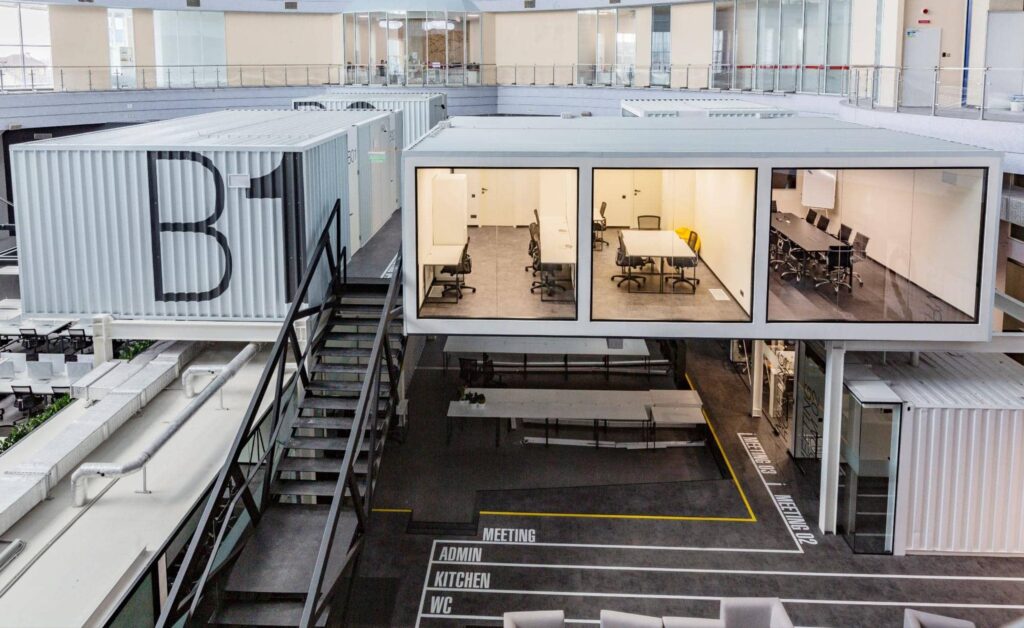
Only a few years ago, containers were mainly associated with facilities on construction sites. Today, office containers are increasingly used as fully fledged offices by businesses across many industries. Their growing popularity has several explanations: short delivery times, mobility and significantly lower costs compared with traditional buildings. For many entrepreneurs, a container office is an appealing alternative to renting commercial premises or building from scratch.
In a rapidly changing business environment, flexible solutions that enable companies to react quickly are becoming more important. An office container can be installed in a wide variety of locations, transported relatively easily and adapted to current business needs. The key question is whether it is genuinely cost-effective and, if so, for whom.
In this article, we examine how much an office container costs, compare it with conventional buildings and consider the comfort it provides as a workplace. We also look at the costs and other factors to consider before making a decision.
What is an office container and what does it look like?
An office container is a prefabricated steel structure designed for office use. It is often similar in size to a shipping container, but its interior and technical characteristics are adapted to daily use by people. Walls may be built from sandwich panels providing appropriate thermal and acoustic insulation, with the building designed to meet applicable construction standards.
There are two main approaches: converting shipping containers or buying a ready-made office container manufactured specifically for this purpose. A standard office container may include electrical wiring, heating, electric radiators, LED lighting and air conditioning with a heating function.
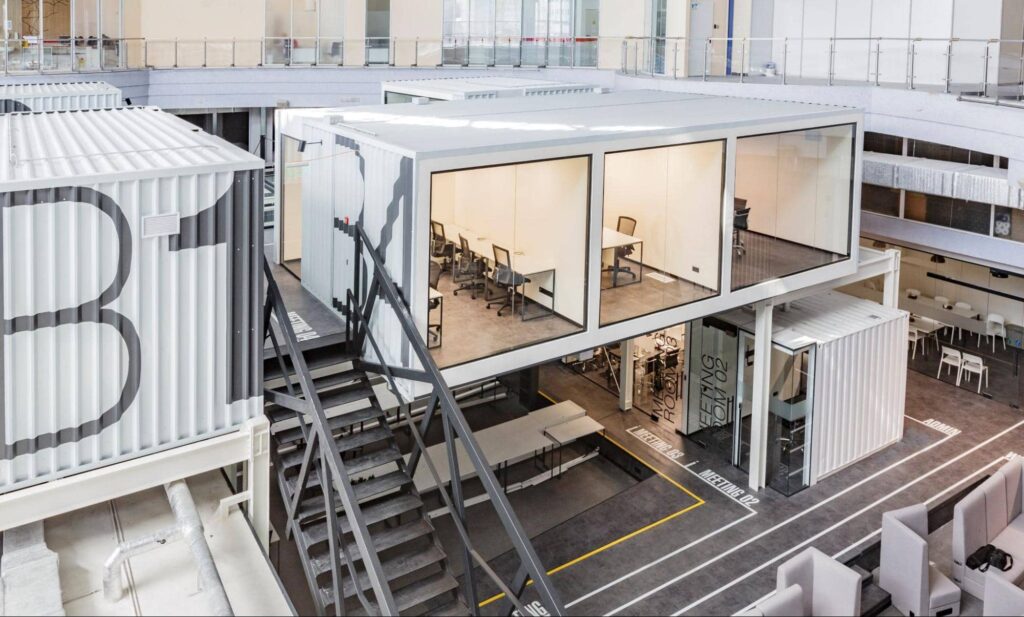
Modern office containers can accommodate desks, cabinets and even a kitchenette or a small staff room. Flexible interior layouts allow a business to adapt the module to its individual needs in terms of both function and appearance. Working in a well-equipped office container can therefore be comparable to working in a conventional office.
Office container costs – what do you really pay?
Cost is one of the main reasons businesses choose office containers. Compared with constructing a conventional office or committing to a long commercial lease, the initial investment can be much lower. This matters especially to small businesses, start-ups and project-based companies.
So how much does an office container cost? Based on the manufacturer and distributor offers cited in the original article:
- A used office container costs approximately PLN 15,000–25,000 excluding VAT.
- A new, standard office container with installations typically costs PLN 30,000–60,000 excluding VAT.
- Larger or more sophisticated modules with air conditioning, improved insulation and additional equipment may cost more.
Another option is to buy and convert a standard shipping container. According to the article’s 2025 figures, a 20 ft (approximately 6 m) container typically costs about PLN 9,500, while a larger 40 ft model is around PLN 10,700; prices depend on condition and container type. Converting one for office use then requires thermal insulation, electrical installation, windows, doors, heating and interior finishing. These modifications may add roughly PLN 8,000–22,000 or more, depending on the extent and finish. The total may be comparable to a new office container, but conversion offers more freedom to customize the interior.
Price depends mainly on container size, the scope of equipment, material quality and the level of customization. It also matters whether the container arrives ready for use or requires additional work on-site.
Budget for transport, unloading and ground preparation as well. Concrete blocks or foundation slabs are often sufficient, potentially costing less than complete foundations for a conventional building. Running costs can also remain manageable thanks to effective insulation and energy-efficient heating.

Container office versus traditional office – costs and possibilities
To assess cost-effectiveness, compare a container office with a traditional brick-built office or commercial unit. Differences extend beyond price to delivery time and flexibility.
| Comparison | Office container | Traditional office |
| Initial cost | PLN 30,000–60,000* | PLN 150,000–300,000 |
| Delivery time | 2–6 weeks | 6–12 months |
| Mobility | Very high | None |
| Permits | Often unnecessary or simplified | Required |
| Running costs | Low | Medium or high |
| Expansion | Fast, modular | Costly and time-consuming |
*When converting a shipping container, the purchase price of the container alone may be lower (approximately PLN 9,500–10,700), but conversion and furnishing can bring the final cost close to that of a purpose-built office container.
As the table illustrates, office containers offer particular advantages in speed of installation and flexibility. Their ease of transport and modular structure mean they can be relocated or expanded as business needs change. Moving a conventional office can involve significant expense or signing a new lease.
Administrative requirements also deserve attention. Depending on size and duration of use, installing a container may not require a full building permit in some circumstances, but it is important to consult the local planning and building authority. For companies requiring a rapid and flexible solution, container offices may prove both less expensive and more practical.
Comfort in an office container – is it suitable for everyday work?
Container workplaces used to be associated with makeshift conditions. Today’s modern office containers, however, are designed to provide genuine user comfort comparable with traditional offices.
Thermal insulation, often made from sandwich panels, is essential. It helps maintain a stable temperature year-round. Electric radiators or air conditioning with a heating function can provide warmth in winter and during the shoulder seasons. In summer, air conditioning makes smaller spaces more comfortable.
Suitable lighting also improves ergonomics. Containers can have energy-efficient LED lighting and windows that admit daylight. Interiors can comfortably accommodate desks, cabinets and other office furniture; larger units may also include a kitchenette or a staff room. With a good layout, an office container can remain functional and comfortable throughout a full working day.
Installation, location and formalities – what should you consider?
Ease of installation is one of the greatest benefits of office containers, although installation still needs careful planning. Proper ground preparation is essential. Concrete blocks or prefabricated slabs are often used to stabilize the structure and protect it from moisture.
Containers can be placed in a wide variety of locations, allowing companies to choose a convenient site. If business operations move, the container can be dismantled and transported elsewhere. This ease of transport and high mobility distinguish them from conventional offices.
Permit requirements depend on local regulations and the intended period of use. In many cases, a full building permit may not be required, but the local planning and building authority should be consulted. Checking the rules helps avoid legal problems and ensures the container meets safety and land-use requirements. With these matters addressed, office containers can provide a quick and flexible workplace solution.
Who can benefit from an office container?
A container office is especially useful where flexibility and rapid adaptation of space are important. Office containers are therefore popular on construction sites, where they provide facilities for managers, engineers and administration. They can be placed near the work area and moved to another location once the project ends.
Small and medium-sized businesses also increasingly choose this option to avoid the high cost of conventional office construction or long-term rental. A container office enables companies to start operating quickly without waiting for a lengthy construction project or navigating complex procedures. It also suits seasonal businesses and companies whose needs change as they grow.
Container offices are useful for start-ups and businesses testing a new location. Mobility and modular expansion mean the entrepreneur is not tied to one address, and the investment can grow with the company.
Office container lifespan and maintenance
Despite concerns some investors may have, these structures are designed for long-term use. A strong steel frame and weather-resistant materials can allow a container to last as long as 20–30 years, provided it receives regular maintenance.
Running costs need not be high. Good thermal insulation reduces heat loss and therefore heating bills. Electrical installations, lighting and air conditioning are comparable to those used in conventional offices. Items of equipment can usually be replaced or extended without altering the entire structure.
Upgrades are another advantage. A container can be fitted with new technology or its interior layout can be changed as the business develops, extending its useful life and improving long-term value.
Summary: is a container office worth it?
Looking at costs, comfort and practical uses, a container office can be cost-effective in many situations. Lower initial expenditure, shorter delivery times and high mobility enable office containers to compete with conventional buildings.
For companies needing a quick start, flexible workspace and the option to relocate, an office container can be a practical choice. With appropriate planning and a layout tailored to individual needs, it can offer good working comfort and a long service life. It can therefore support business growth without unnecessary overheads.